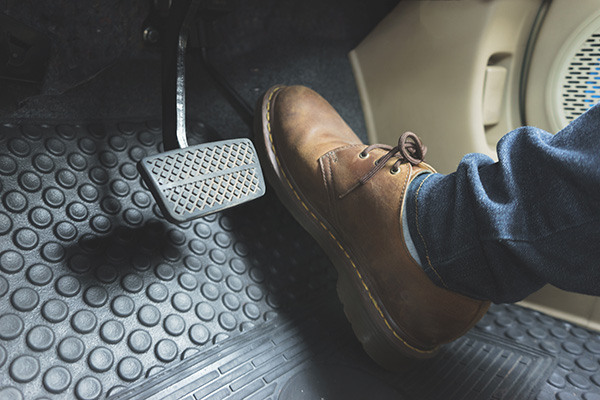
Acceleration hesitation can feel like your car is second guessing you. You press the pedal, and instead of a smooth pull, you get a pause, a stumble, or a weak surge that shows up at the worst moment. Sometimes it lasts half a second, sometimes it keeps happening every time you try to pick up speed.
The tricky part is that “hesitation” can be caused by a few different systems, so the pattern matters as much as the symptom.
When Hesitation Happens And Why The Pattern Matters
Hesitation off the line often points to a different problem than hesitation at highway speed. A stumble right after startup can be tied to cold fuel control, air leaks, or sensors that are slow to respond. A hesitation that only shows up going uphill or passing usually points toward load-related issues like weak ignition or fuel delivery.
Pay attention to whether the engine feels smooth once you get past the stumble. If it only happens during light throttle, it may suggest a small air leak or a dirty airflow sensor. If it happens under heavier throttle, the engine may be struggling to keep up with demand, which is where fuel pressure and spark strength become suspects.
Air And Fuel Issues That Create A Flat Spot
Engines need the right mix of air and fuel at the exact moment you ask for power. If extra air sneaks in through a cracked intake boot or a small vacuum leak, the mixture can go lean, and the engine may stumble. This kind of hesitation often feels worse when you just barely press the gas, then improves if you press harder.
Fuel delivery problems can feel similar, but the behavior is often tied to load. A weak fuel pump, restricted filter, or injector that is not flowing evenly can cause a bog when the engine needs volume and pressure. We see this most when drivers describe a hesitation that shows up during merging or climbing, then disappears when the road levels out.
Spark And Misfires That Hide Until You Ask For Power
A weak spark can behave politely at idle and then fall apart under acceleration. Worn spark plugs, tired coils, and damaged boots can misfire when cylinder pressure rises, which is exactly what happens when you step into the throttle. The hesitation can feel like a quick shake, a repeated stutter, or a momentary loss of power.
Misfires do not always trigger a warning light right away. Some vehicles log misfire activity quietly until it becomes consistent enough to set a code. When we test a hesitation complaint, we pay close attention to misfire counters and how they change under load, because that data often points to the problem faster than guessing.
Transmission And Drivetrain Problems That Can Feel Like Hesitation
Not every hesitation is engine related. Sometimes the engine is making power, but the transmission is slow to respond, especially during a downshift request. That can feel like a delay, then a sudden surge when the gear finally engages. Low or degraded transmission fluid, shift control issues, or torque converter problems can all create this type of complaint.
Drivetrain issues can also mimic hesitation. A slipping clutch, a worn CV joint under load, or excessive engine movement from a failing mount can feel like the car briefly loses its push. The key clue is whether engine RPM rises without matching acceleration, or whether the hesitation feels more like a mechanical “break in drive” than an engine stumble.
Test-Drive Cues That Help Narrow It Down
If you notice hesitation, a few simple observations can make diagnosis much faster. Try to note the conditions, not just the feeling.
- Does it happen only when the engine is cold, or only after it is fully warm?
- Does it show up during light throttle, heavy throttle, or both?
- Does it happen at a specific speed range, like around 30 to 40 mph or near highway speeds?
- Do you feel a single stumble, or a repeated surging that comes and goes?
- Does the transmission seem to hesitate before the engine responds?
Also, pay attention to any warning lights, even if they come and go. A brief traction control light flash during hesitation can sometimes point to misfires or torque control events, which helps narrow the direction of testing.
Owner Mistakes That Make Hesitation Worse Or Harder To Diagnose
The most common mistake is replacing parts based on a generic code or a guess. A lean code can be caused by a vacuum leak, fuel delivery, or a sensor reading problem, and swapping parts without verifying the cause often turns into a long and expensive experiment. Another mistake is clearing codes right away, which wipes freeze frame data that shows what the engine was doing when the problem happened.
It’s also easy to ignore a mild hesitation until it becomes frequent. If the cause is misfire related, extended driving can stress the catalytic converter over time. And if the cause is fuel delivery, the symptom often grows slowly until one day it becomes hard to ignore.
Get Acceleration Diagnostics in Sherman Oaks, CA with Sherman Oaks Exclusive
If your car hesitates when you accelerate, we can pinpoint whether the cause is air and fuel delivery, ignition misfire, sensor input, or a transmission-related delay. We’ll reproduce the symptom, test the likely systems, and explain what we find so you are not throwing parts at the problem.
Get acceleration diagnostics in Sherman Oaks, CA with Sherman Oaks Exclusive, and we’ll help you get back to smooth, predictable power.