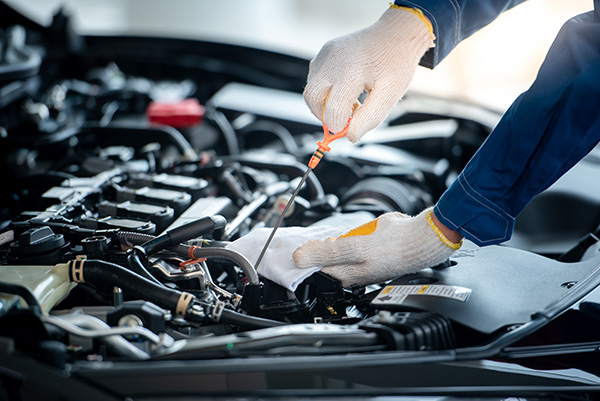
Checking fluids at home is one of the simplest ways to understand how your car is doing between service visits. You do not need to be a technician to spot low oil, dirty coolant, or suspicious brake fluid. A few minutes in the driveway can tell you when the vehicle needs attention before a warning light appears on the dashboard.
The key is checking the right way. Fluid levels should be read on level ground, with the vehicle parked safely and the engine temperature set to the owner’s manual recommendation. Some fluids are checked cold, some warm, and some should not be opened when hot at all.
Start With Engine Oil
Engine oil is the first fluid most drivers should learn to check. Park on level ground, shut off the engine, and let the oil drain back into the pan for a few minutes. Pull the dipstick, wipe it clean, reinsert it fully, then pull it again to read the level.
The oil should sit between the low and full marks. If it is below the safe range, the engine needs the correct oil added before continuing to drive. Pay attention to appearance too. Very dark oil, a burnt smell, metallic glitter, or a level that keeps dropping can point to leaks, oil burning, or overdue service. Regular maintenance is still important, even if the oil level looks fine today.
Check Coolant Only When It Is Safe
Coolant should be checked carefully because a hot cooling system is under pressure. Do not remove a radiator cap or pressurized cap when the engine is hot. If your vehicle has a translucent coolant reservoir, you can usually check the level by looking at the markings on the side when the engine is cool.
The level should be between the minimum and maximum marks. If it is low, use the coolant type your vehicle requires. Water can help in an emergency, but it is not a good long-term substitute for the correct coolant mixture. If the level keeps dropping, the car is not using coolant normally. It has a leak, pressure problem, or another cooling system concern that needs to be found.
Look At Brake Fluid Level And Color
Brake fluid is usually checked at the reservoir near the brake master cylinder. The reservoir's exterior often has minimum and maximum markings, so you may not need to remove the cap. If the level is low, do not ignore it.
Low brake fluid can result from brake pad wear, but it can also indicate a leak. Brake fluid should look fairly clear to light amber in many vehicles. If it looks very dark, dirty, or contaminated, the system needs attention. Since brakes are safety-related, low fluid, a soft pedal, a sinking pedal, or a brake warning light should be handled right away.
Know How To Check Transmission Fluid
Transmission fluid can be less straightforward because not every modern vehicle has a dipstick. Some are sealed or require a specific temperature and procedure to check correctly. If your car does have a transmission dipstick, the owner’s manual will explain whether it should be checked with the engine running, warm, in Park, or under another condition.
Healthy automatic transmission fluid is commonly reddish or pinkish, depending on the vehicle and fluid type. Burnt smell, dark color, slipping, delayed engagement, or harsh shifting are warning signs. Do not add random fluid. Using the wrong transmission fluid can cause serious shifting and wear problems.
Do Not Forget Power Steering And Washer Fluid
Some vehicles still use hydraulic power steering fluid, while others use electric power steering and have no fluid to check. If your vehicle has a reservoir, check the level against the markings and use only the fluid type listed for that system. Low fluid can lead to whining noise, heavier steering, or damage to the pump.
Washer fluid is the easiest one to check and top off, but it still deserves attention. Running out is annoying on a clear day and unsafe when bugs, dust, salt, or road spray hit the windshield. Use real washer fluid, not plain water, especially if the vehicle ever sees cold weather.
Watch For Patterns, Not Just One Reading
One low fluid reading gives you information. Repeated low readings give you a pattern. If the oil, coolant, brake fluid, or power steering fluid keeps dropping, topping it off again and again isn't solving the problem.
Look under the car for wet spots. Notice smells after driving. Pay attention to smoke, steam, warning lights, or changes in braking, steering, shifting, or engine temperature. Home checks are useful, but they do not replace a professional inspection when something keeps changing.
Get Fluid Inspection In Sherman Oaks, CA, With Sherman Oaks Exclusive
If you checked your fluids and found a low level, dirty fluid, or a recurring problem, Sherman Oaks Exclusive in Sherman Oaks, CA, can help identify the cause and service the vehicle properly.
For help with oil, coolant, brake fluid, transmission fluid, and other important fluids, contact us to schedule an appointment.