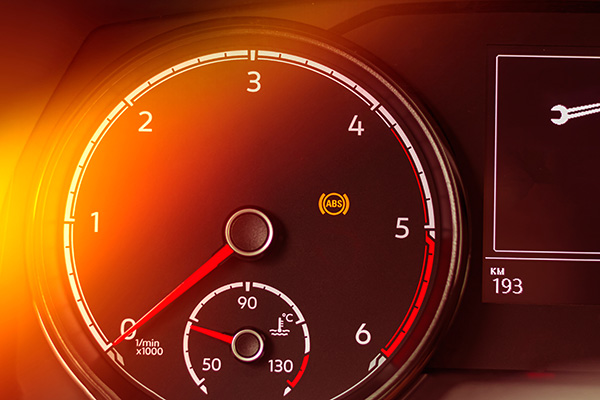
An ABS light can be frustrating because it doesn't always indicate a dramatic change in how the car drives. The vehicle may still start, stop, and handle in a way that feels mostly normal, which makes it easy to push the warning aside for a few days. Then a few days turn into a few weeks, and the light becomes part of the dashboard instead of a reason to act.
That is usually when drivers get caught off guard.
Why The ABS Light Deserves Attention
The ABS light means the anti-lock braking system has detected a fault and shut part of the system down or limited how it works. Your regular brakes may still stop the car, but the anti-lock feature that helps prevent wheel lock during hard braking may no longer be available. That difference gets much more important in the rain, during panic stops, or on uneven pavement.
A lot of people assume the light is just an electrical nuisance because the pedal still feels normal. The real issue is that the car may no longer have the same level of control it was built to give you in an emergency.
What The ABS System Actually Does
ABS helps the wheels keep rotating during hard braking instead of locking up and sliding. That gives the driver a better chance of steering while braking hard, especially on slick roads. In normal everyday stops, you may never notice it working. During a sudden stop, it can make a major difference in keeping the car more stable and easier to control.
That is why an ABS fault should not be treated like a minor dashboard annoyance. The warning is tied to one of the systems designed to help you stay in control when braking conditions get ugly fast.
The Most Common Reasons The ABS Light Turns On
Several problems can trigger the light, and some are much more common than others. A few of the usual suspects include:
- A failed wheel speed sensor
- Damaged sensor wiring
- A bad ABS module
- Low brake fluid
- A problem with the ABS pump or hydraulic unit
- Corrosion or debris around the wheel sensor area
Wheel speed sensors lead this list for a reason. They live in a rough environment and are exposed to heat, moisture, dirt, and road debris every time the car is driven. Once one stops reading correctly, the ABS system can no longer trust the wheel-speed information it needs.
Why The Car Can Still Feel Fine
Many drivers get confused because the light comes on and the car still seems to brake normally. That happens because the base braking system and the anti-lock system are connected but not identical. In many cases, the standard brakes are still doing their job, so nothing feels very different during calm, everyday driving.
The problem shows up when you need the extra help ABS provides. A hard stop on a wet road, a quick lane correction while braking, or a panic stop in traffic can feel very different when the anti-lock feature is not there to assist. That is why waiting just because the car feels fine can be misleading.
When The ABS Light Comes On With Other Warnings
The ABS light sometimes shows up by itself, but it can also appear with other warnings. If the traction control light, stability control light, or brake warning light comes on with it, the issue may be affecting more than one safety system. Those systems often share information, so one fault can create a chain reaction across the dashboard.
That is where a proper inspection becomes even more useful. A single wheel speed sensor fault can affect several systems at once, while low brake fluid or a hydraulic problem may point toward something more urgent. Getting the codes read is the fastest way to narrow the problem down.
When You Should Stop Driving And Get It Checked
A steady ABS light by itself does not always mean you need to stop the car immediately, but it does mean the vehicle should be checked soon. If the ABS light comes on with a red brake warning, a soft pedal, a hard pedal, or a clear change in braking performance, the situation becomes much more serious. At that point, the problem may involve more than just the anti-lock system.
Drivers should also move faster if the car feels unstable under braking, pulls during stops, or if the brake fluid is low. Problems tied to braking should not be left to guesswork. Regular maintenance helps catch part of this early, but once the light is on, the next step should be testing, not waiting.
Why Diagnosis Matters More Than Guessing
ABS repairs are easy to guess at, but expensive to get wrong. A sensor issue, a wiring problem, or a module fault can all trigger the same warning light, but the repair path is very different for each. Replacing parts based on hunches is how a simple warning turns into a much larger bill.
A scan tool and a full inspection help confirm where the fault started and whether the rest of the brake system is still in good shape. That is the best way to keep the repair focused and get the right answer the first time.
Get ABS Light Diagnostic In Sherman Oaks, CA, With Sherman Oaks Exclusive
If your ABS light is on, Sherman Oaks Exclusive in Sherman Oaks, CA, can perform an inspection, scan the system, and find out whether the problem is a wheel speed sensor, module issue, brake fluid concern, or something deeper in the braking system.
Bring it in before a warning that feels small becomes a much bigger problem when you need the brakes most.